Planning a trip to Germany? Whether you are looking for a cozy restaurant in Berlin, a reliable hotel in Munich, or a car repair shop off the highway, you probably rely on Google Maps. However, business ratings in Germany have their own crucial specifics. Due to aggressive legal practices, the local market has long faced hidden manipulation. But Google has decided to step in and introduce radical transparency.
The German Legal Paradox: Why did bad reviews disappear?
Most travelers assume that the average rating on Google Maps accurately reflects reality. However, this hasn’t been entirely true in Germany in recent years. The German legal system provides companies with exceptionally strong tools to protect their commercial reputation. A massive business emerged based on specialized law firms offering companies bulk deletion of negative reviews for fixed fees.
The principle was simple:
The company’s legal representative sent a „defamation“ complaint to Google claiming that the reviewer was never a customer (e.g., the company has no one under that name in their system). According to the German interpretation of the law, the platform had to hide the review in such cases and prompt the author to provide proof of the transaction (receipt, invoice, email) within a certain period. However, most casual users or tourists ignored the prompt in German or had long since thrown away the old receipt. The result? Genuine negative ratings were deleted across the board and legally, artificially inflating the average rating of businesses.
The Big Bang in 2026: Google introduces transparency
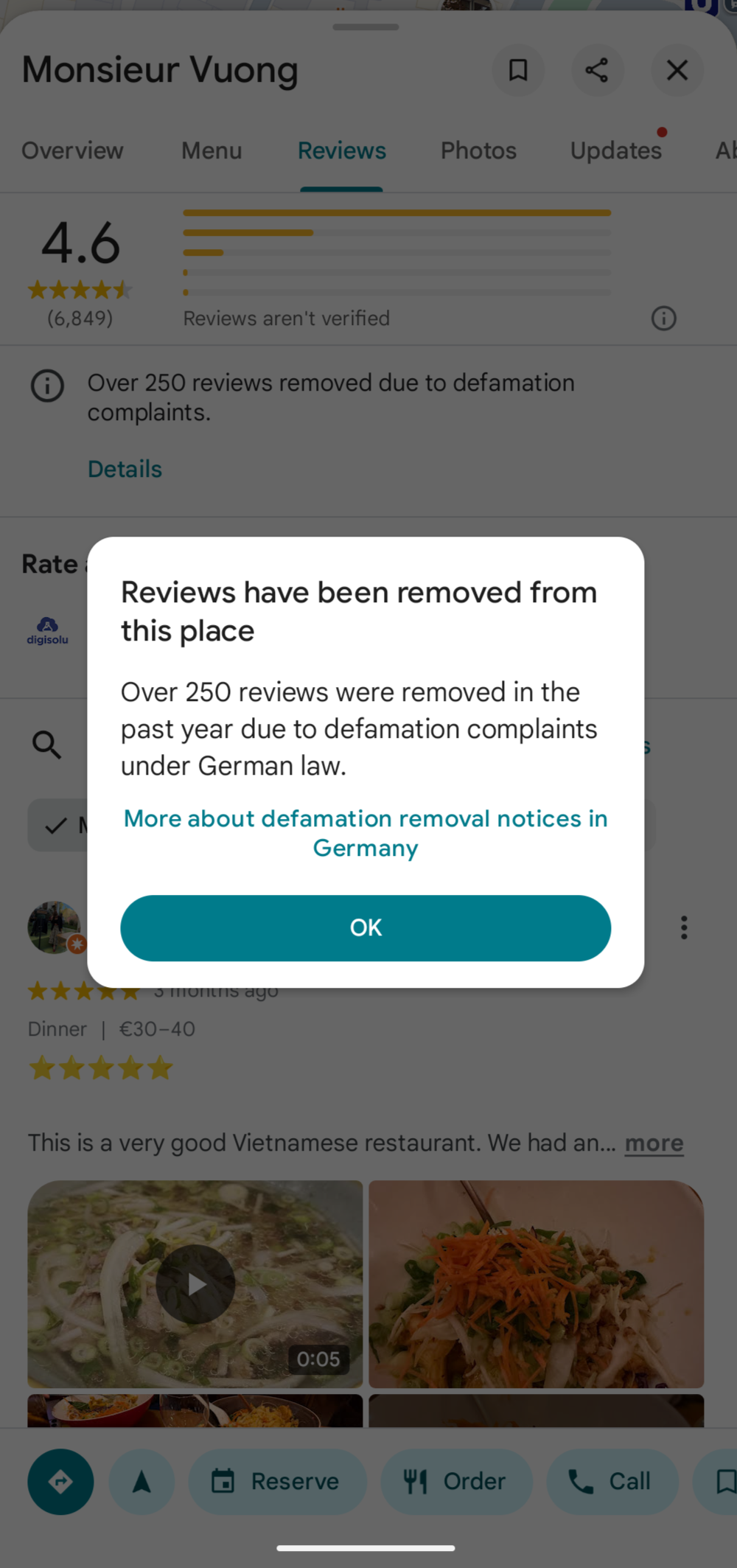
The Local Guides community and users themselves have long pointed out that the credibility of entire industries in Germany suffers due to these practices. Google therefore took a radical step. If a company now tries to clean its profile using legal templates or, conversely, artificially buys positive ratings, Google will not hide it, but will publicly display it directly on their profile.
A little caffeine break for the author?
Do you like this article and feel it saved you hours of fumbling with settings? My keyboard runs exclusively on caffeine power, and your support keeps the engine running!
If you want to support the creation of more guides or simply send me a „digital tip“ for a coffee, you can do so by donating to the transparent bank account Fio 2602098198/2010
IBAN: CZ07 2010 0000 0026 0209 8198
BIC/SWIFT: FIOBCZPPXXX
QR code works in your bank’s app
Your karma (and my french press) will be immensely grateful!🌍
New transparent labels in German Google Maps:
Google proactively started displaying warning messages in two key situations:
Block due to suspicious activity: If the algorithm detects an unusual surge of (often purchased) 5-star ratings, the ability to add new reviews is temporarily blocked, and a warning to customers appears on the profile.
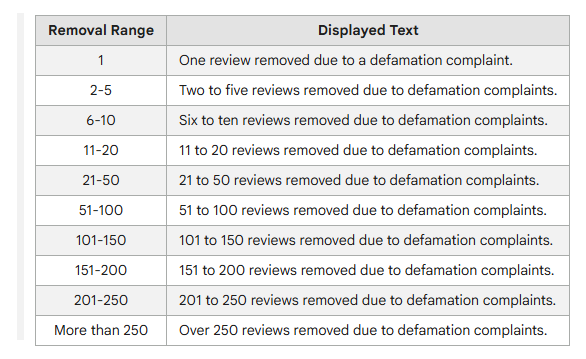
Notice of removed reviews: If a company removes negative feedback in bulk through defamation complaints, Google will display the text directly on its profile: „X to Y reviews were removed due to defamation complaints under German law.“
How to read reviews in Germany like a pro?
Thanks to the new measures, the situation is dramatically improving, and honesty is starting to win again. As travelers, you can now follow these rules so you don’t get fooled:
Look for warning labels: When you come across a profile that states, for example, „21 to 50 reviews removed due to defamation,“ it’s a huge red flag. It indicates that the company’s management prefers to invest in lawyers rather than improving their services.
Follow the status of Local Guides: Reviews from active Local Guides carry enormous weight in Germany. If the author has dozens or hundreds of reviews from various places and details their experience, you can trust them. Moreover, the legal machinery has a harder time proving that it’s a fake profile with such active users.
Ignore brief texts and just stars: A pure 4.8-star average without text details is suspicious. Genuine German reviews are factual, detailed, and often contain specific details about the food, staff, or prices. Fake praise, on the other hand, is usually general and brief.
Consider the timeframe: Google displays data for the last 365 days on the warning labels. If you see a clean history over the recent months, the company has either learned its lesson or its current ratings are already organic.
Summary for travelers: Today, reviews on Google Maps in Germany can be trusted much more than ever before.
Thanks to specific legal pressure, Germany has become Google’s testing ground for fighting manipulation.
If you learn to watch for transparent warning labels and focus on texts from real Local Guides, you will get a very accurate picture of the quality of a given business.
We help businesses build a trustworthy and clean online reputation in accordance with all Google policies.
What about your reviews, how do you take care of them? Is your business profile on Google trustworthy? Would you like us to conduct an independent analysis of your Google business profile to know exactly where you are currently struggling and what steps can lead to immediate improvement?
Tento web používá soubory cookie ke zlepšení vašeho zážitku při procházení webem. Z nich se ve vašem prohlížeči ukládají soubory cookie, které jsou kategorizovány podle potřeby, protože jsou nezbytné pro fungování základních funkcí webu. Používáme také soubory cookie třetích stran, které nám pomáhají analyzovat a porozumět tomu, jak tento web používáte. Tyto cookies budou uloženy ve vašem prohlížeči pouze s vaším souhlasem. Máte také možnost odhlásit se z těchto souborů cookie. Ale odhlášení některých z těchto souborů cookie může ovlivnit váš zážitek z prohlížení.
Nezbytné soubory cookie jsou naprosto nezbytné pro správné fungování webu. Tato kategorie zahrnuje pouze soubory cookie, které zajišťují základní funkce a bezpečnostní prvky webu. Tyto soubory cookie neukládají žádné osobní údaje.
Jakékoli soubory cookie, které nemusí být zvláště nutné pro fungování webu a používají se konkrétně ke shromažďování osobních údajů uživatelů prostřednictvím analýz, reklam a jiného vloženého obsahu, se označují jako nepotřebné soubory cookie. Před spuštěním těchto souborů cookie na vašem webu je povinné získat souhlas uživatele.